
Therapy
Messaging Your Therapist Between Sessions (and the Draft You Wrote at 11 p.m.)
Do any of these sound familiar?
- It's 11 p.m. and you're writing to your therapist. You rewrite it four times, delete it, then start again from "Hi, sorry to bother you."
- You sent a long message in your therapy app, and since then you've been refreshing the screen like it's the score of a game that just went into overtime.
- You start with "quick question." Six hundred words follow. Quick, in the legal sense.
If you've done one of these this month, nothing is wrong with you. The useful question is which of those messages needed sending at all.
Why the urge to message shows up between sessions:
A session ends on the hour. Your thoughts don't. The insight tends to arrive on the bus, in the line at the pharmacy or in the shower, exactly when nobody is listening anymore. It's the perfect comeback that shows up three hours after the argument, fully formed and completely useless.
Then there's the relationship itself. Therapy is one of the few places where someone listens without judging you, so of course a hard moment makes you reach for that person first. None of that makes you needy, or bad at therapy.
Sometimes the urge is simply about not losing anything before next week. Then the message is really a note that happens to have an address on it. A tough session turns the volume up on all of this, especially on the days you feel worse after therapy. For the bigger picture of the time between sessions, start with what to do between therapy sessions.
Fun fact: on Talkspace you can send text, audio or video messages, and on some plans that back-and-forth is the whole therapy, not an add-on to live sessions.
Messaging your therapist between sessions: what it actually looks like:
Messaging your therapist between sessions looks very different depending on the setup, so start with which one you're in.
On a messaging platform, messages are the therapy. This is called asynchronous messaging therapy: you and a licensed therapist write back and forth without both being online at the same time. Talkspace says its therapists reply during their working hours, five days a week, within one business day, and on weekends only if those are their working hours. BetterHelp says there's no limit to how many messages you can send, and that therapists often respond within 24 hours, though this varies by provider. So "unlimited" is about how much you can send, not how fast anyone answers.
With an in-person or video therapist, the rules come from your therapist or the practice. Some keep messages for logistics only, others welcome a short update, and some read everything but answer only in the next session.
What therapists usually do with a message: read it during working hours, then reply briefly or save the topic for the session. In Australia, 2026 guidance from the Australian Psychological Society says contact outside sessions should have a clear purpose related to the therapy, and that emails and text messages belong in the client's record. Rules differ by country and state, but the habit travels well: your message may become part of your record, so write it like something you'd be okay rereading together.
A message can't handle a crisis, because the reply may come the next business day. Talkspace says the same about its own service. If you're in danger or thinking about ending your life, call or text 988 in the US, or your local emergency number, instead of waiting for a reply.
An inbox is not an emergency room, and it was never meant to be.
What research turned up:
In 2020, Thomas Hull and colleagues followed more than 10,000 people doing therapy by message with a licensed therapist, who replied at least once a day on weekdays (BMC Psychiatry). The study tracked the first 12 weeks: every three weeks, people filled out two standard questionnaires for depression and anxiety, the PHQ-9 and the GAD-7. About 31% reached remission, about 37% improved without reaching remission, and about 32% showed no clear change. The study was observational, with no comparison group, data from a single platform and authors linked to Talkspace, so it can't prove that messaging works, only show how improvement in this format can look.
Then, in 2025, a University of Washington team led by Michael Pullmann and Patricia Areán ran the comparison that study couldn't (published in JAMA Network Open, with a summary from the University of Washington). They randomly assigned 850 adults with depression to therapy by message or therapy by video, for 12 weeks. Both groups improved at a similar pace. People in the video group were slightly more likely to drop off early. The honest caveat: it all happened on one commercial platform, Talkspace, so the results may not carry over to others. Still, writing to a therapist can be real therapy when that's the agreed format. The wider comparison lives in online vs in-person therapy.
More contact doesn't automatically mean better results, either. In 2014, Furber and colleagues in Australia added text messages from therapists between phone sessions for people receiving crisis support, and compared them with an earlier group who got no texts (Journal of Medical Internet Research). Clinical outcomes showed no significant difference. Note who was texting, though: the therapists, not the clients.
This is where the research runs out. These studies are about messaging as an agreed form of therapy. Nobody has properly measured what happens when the client of an in-person therapist writes between sessions, so there you're left with the practice's rules and a conversation, not numbers.
The format can carry real therapy. The 11 p.m. draft is a different thing.
Before you hit send, try this:
- Ask about the rules in session, not in a message. Try: "What's your policy on messages between sessions, and how fast do you usually reply?" On a platform, ask about your therapist's working hours and whether they reply on weekends (Talkspace itself suggests settling this early). It beats decoding a quiet Saturday like a ransom note.
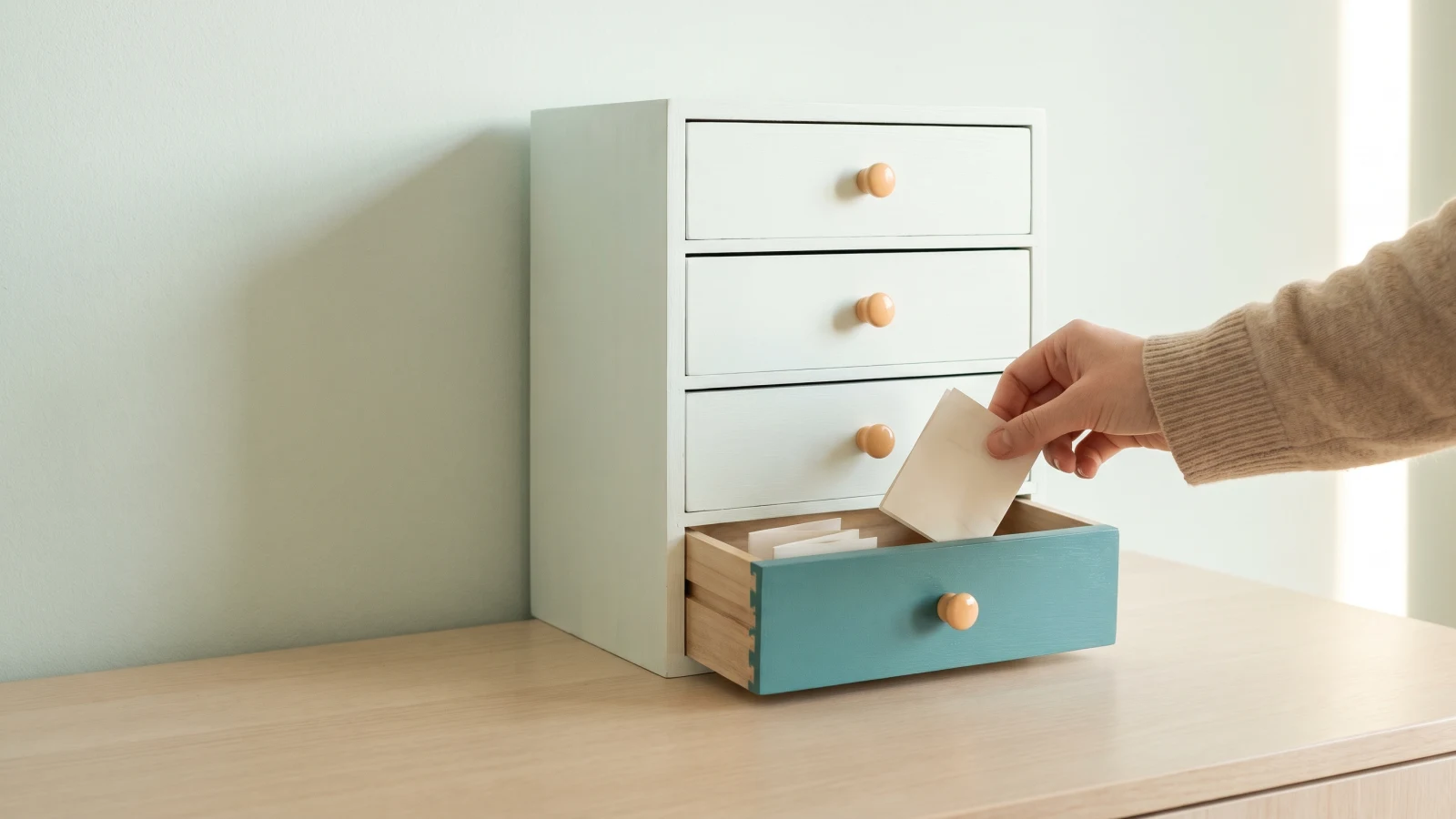
- Sort the message before you write it. Picture four drawers: logistics (rescheduling, payment), a short update, something for the session, and a crisis. Logistics you send. An update you send short. Something for the session you write down and keep. A crisis goes to 988 or your local emergency number, not to an inbox.
- Say it out loud first, then decide. Record or write the full version for yourself and wait an hour. Often, once the thought is out, it feels handled, and what goes to your therapist is one sentence instead of a wall of text.
- Keep what you send short, and say what you need. Try: "No need to reply. Something came up after Tuesday and I'd like to start with it next time." It gives your therapist the information and takes the pressure off answering.
- Bring the rest to the room. Open your next session with the thing you didn't send: "I almost messaged you on Thursday. Here's what it was about." It's one of the simplest ways to prepare for a therapy session. If messages regularly go unanswered for longer than the policy promises, raise that too, and on a platform it can be a reason to switch therapists.
Between-session voice notes
Say the whole thing out loud first. It's transcribed, you review the text, and it waits for your next session. Try it free in MindSync →
Where MindSync fits:
This is what MindSync's Workspace is for. Log the 11 p.m. draft you didn't send, the thing that came up on the bus, the question you want to start with. Give it time, and your Before therapy card turns what came up since last time into a short summary and up to three questions to bring. Then open the session by reading the first one out loud. Nothing in MindSync goes to your therapist: it holds what you don't need to send, and you bring it into the room yourself. When the urge to write hits at 11 p.m., you can also talk it through with Orca, MindSync's therapy assistant between sessions.
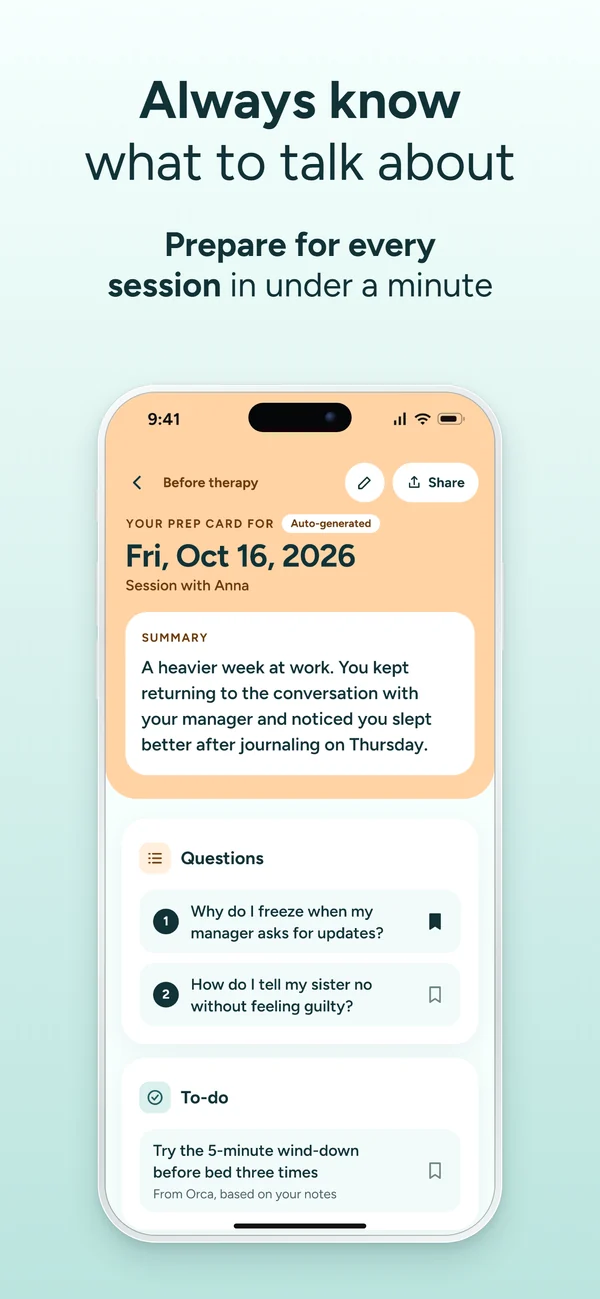
Before therapy card
Turn the messages you didn't send into a short recap and up to three questions for the start of your next session. Try it free in MindSync →
Keep the 11 p.m. draft for your next session, not your therapist's inbox.


What's the message you keep drafting and never send, and what would happen if you said it out loud next session?
Frequently asked questions
Can I text my therapist between sessions?
It depends on the setup. On a messaging platform like Talkspace or BetterHelp, yes: messaging is the format itself. With an in-person or video therapist, it's their policy, and many keep texts for logistics like rescheduling, so ask in session what they prefer. Texts aren't for emergencies. In the US, call or text 988, or your local emergency number.
How often should I message my therapist on Talkspace?
There's no ideal number. Talkspace doesn't cap messages, and its therapists reply during their working hours, five days a week, within one business day. Some people find a few thoughtful messages easier to work with than a steady stream, but the right rhythm is the one you agree on with your therapist, ideally early on.
Is it weird to email my therapist?
No, plenty of clients do. What matters is your therapist's policy and what the email is for. Keep it short and clear, and make it okay to go unanswered: "No need to reply, I'd like to start with this next time."
Do therapists read messages between sessions?
Usually, yes, during their working hours. They may reply briefly or save what you wrote for the next session. In Australia, professional guidance says emails and texts should go into the client's record, so it's worth asking your therapist how they handle messages.
Can you message your therapist anytime on BetterHelp?
Yes, you can send messages at any time, and BetterHelp says there's no limit to how many. Replies aren't instant: BetterHelp says therapists often respond within 24 hours, though that varies by provider. Messages aren't for a crisis, so if you're in danger, call or text 988 in the US or your local emergency number.
Keep more from every session
MindSync keeps your sessions and the week between them in one place, so your progress stops slipping away. The trial is free, no credit card needed.


Get the app