
Therapy
Racing Thoughts at Night: Why Your Brain Waits Until You Lie Down
Your body gave up two hours ago. The light is off, the room is quiet, and a conversation from Thursday arrives with fresh dialogue and better lighting. Then an email you sent in 2019. Then tomorrow, in detail, twice. None of it is urgent. All of it is loud.
Racing thoughts are not the same as worry
Most advice on this treats bedtime thinking as one thing and calls it overthinking. The research is starting to pull it apart, and the split matters, because the pieces respond to different handling.
Worry runs forward: what if, and then what, and how would I cope. Rumination runs backward: why did I say that, what does it say about me. Racing thoughts are neither. They are fast and crowded, thoughts stacking on thoughts and changing subject before any of them finishes.
Weiner and colleagues put this to the test in a 2021 study in Comprehensive Psychiatry, comparing 72 people with insomnia disorder, 49 people with bipolar disorder in a hypomanic episode and 99 healthy sleepers on the Racing and Crowded Thoughts Questionnaire. Racing-thought scores were highest in insomnia, particularly among people whose trouble was falling asleep rather than staying asleep, and the scores climbed through the evening and peaked at bedtime. The finding that matters most here: racing thoughts at bedtime were associated with insomnia severity, while rumination and worry were not.
Hold it loosely: this is one cross-sectional study built on self-report questionnaires, so it maps an association rather than a cause. What it does suggest is that the standard instruction to challenge your worries may be aimed at the wrong target on nights when your head is simply moving too fast.
Why the volume goes up when the lights go down
Nothing is left to drown it out
For 16 hours you had a queue, a podcast, a colleague talking, a screen. Lying down removes every one of them at once. The thoughts did not get louder at 11pm. The room got quieter, and you finally had the attention to spare.
Harvey compared 30 people with sleep-onset insomnia against 30 good sleepers in a 2000 study in the British Journal of Clinical Psychology. Both groups thought before sleep. The difference was in the texture of it: the insomnia group described their pre-sleep thinking as more occupying, less deliberate, longer-lasting and more likely to get in the way of falling asleep. It was not that they had more to think about. Their thinking had more of them.
Cognitive arousal keeps the system online
Sleep researchers separate the mind version of being wound up from the body version. Nicassio and colleagues built that distinction into the Pre-Sleep Arousal Scale in 1985 in Behaviour Research and Therapy: eight items for cognitive arousal, a mind that will not switch off, and eight for somatic arousal, a heart that will not slow down. Both scales told poor sleepers apart from good ones.
So the tired-but-wired thing is not a contradiction. You can be exhausted and still cognitively switched on, and the switched-on part is what keeps you looking at the ceiling.
A short night makes the next one harder to manage
Then the loop feeds itself. Yoo, Gujar, Hu, Jolesz and Walker scanned sleep-deprived volunteers for a 2007 study in Current Biology and found roughly 60% greater amygdala response to negative images than in the rested group, alongside weaker connectivity with the prefrontal regions that normally damp that response down. That was around 35 hours without sleep, far harsher than one bad Tuesday, so do not read your own night into the number. The direction is the useful part: emotional material gets harder to handle when you are short on sleep, and last night's thoughts are exactly what tonight has to work with.
What helps, and what only sounds like it helps
Get the loop out of your head and onto something else
The most direct move is to give the thoughts somewhere to go that is not your head at 1am. Scullin and colleagues ran a small sleep-lab study published in 2018 in the Journal of Experimental Psychology: General: 57 young adults spent five minutes writing before bed, half about tasks they still had to do, half about tasks they had finished. The to-do list group fell asleep about nine minutes faster, roughly 16 minutes against 25, and the more specific their list, the faster they dropped off.
One night in a lab with 57 healthy young adults is a small study, so hold the nine minutes loosely. What survives the caveat is the shape of it: writing the open loops down, specifically, appeared to beat reviewing what was already closed.
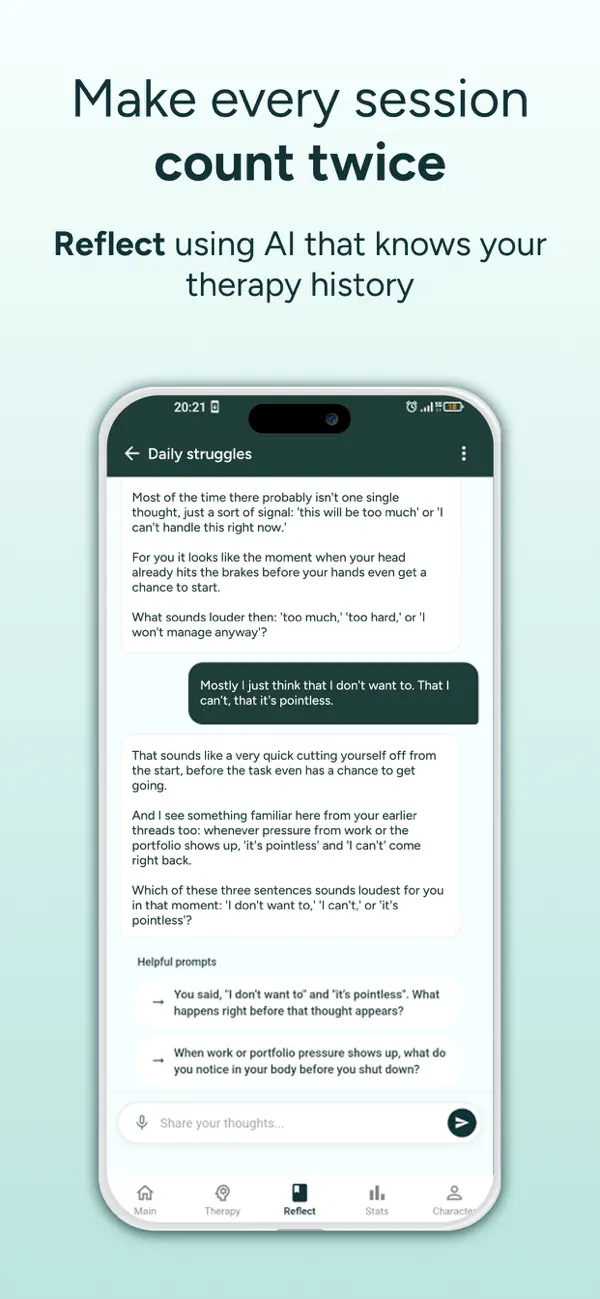
Reflect (AI journaling)
When the loop will not close, a guided reflection gives it somewhere to go, in text or out loud, without turning on a lamp and finding a pen. Try it free in MindSync →
Constructive worry, done earlier in the evening
Better still, move it off bedtime entirely. Carney and Waters had students with insomnia write down each current worry alongside its next practical step, early in the evening rather than in bed. In their 2006 report in Behavioral Sleep Medicine, that group reported less cognitive arousal before bed and spent less time awake than students who only listed the worries.
Two details are doing the work. The step, not just the problem, because a worry with no next action stays open. And the timing, because doing this in bed turns the bed into the place where you sort your life out.
Getting out of bed is not losing
If you have been awake long enough to be annoyed about it, get up, go somewhere dim, do something undemanding, and come back when you feel sleepy rather than when you feel you should. This is stimulus control, and it exists to stop your bed becoming the cue for lying awake.
Jansson-Fröjmark and colleagues reviewed the evidence in 2023 in the Journal of Sleep Research across 11 randomized and experimental studies, and found stimulus control produced small to large improvements in how quickly people fell asleep and how long they slept when compared with doing nothing, g = 0.38 to 0.85. Set against other active treatments the difference was negligible, and most of the trials are decades old. So it helps, and it is not the whole answer.
What to skip
Trying harder to fall asleep is the first thing to drop. Ansfield, Wegner and Bowser tested exactly that in 1996 in Behaviour Research and Therapy and found that pressure to fall asleep quickly made it take longer. Effort is the wrong instrument for something that only arrives once you stop reaching for it.
Scrolling until you feel sleepy is the second. It swaps one kind of stimulation for another and moves the clock. And if the part that will not settle is your body rather than your head, that is a different problem with a different toolkit: settle the body first, then the head.
A wind-down that takes ten minutes
Ninety minutes before bed, and not in the bedroom:
- Two minutes: write down everything still open. Not solutions, just the list.
- Five minutes: next to each item, write the single next action and when it happens. "Email Anna" and "Thursday, first thing."
- Two minutes: anything with no next action goes on a separate line, under a heading that says nothing can be done about this tonight. Naming it as such is the move.
- One minute: close the notebook, leave it in another room, bring the lights down.
If you are already awake at 2am, the list is not the plan. Get up, dim light, something dull, back to bed when sleep feels near rather than owed. If one specific thought keeps returning, say it out loud into your phone in a single sentence so it stops asking to be remembered, then read it back in daylight when you can do something with it. And when the loop is the Sunday evening kind, arriving with the whole week attached, that has a pattern of its own: the Sunday night version of the same thing.
The daytime half of the fix
Nights like this usually finish something the day left open. The conversation you did not have, the decision you postponed, the feeling you drove past at 3pm. A head with nowhere to put things during the day will use the only quiet slot it gets.
Which puts part of the answer twelve hours earlier: catching things when they happen instead of storing them up for the ceiling. There is a fuller case for that in writing it down or saying it out loud.
It also helps to know which nights are the bad ones and what they have in common. Rate your sleep the same way for a few weeks and the pattern surfaces on its own: the late meetings, the second coffee, the days you skipped lunch. Changing one thing at a time is the honest method, and there is a guide to it in testing one wind-down at a time.
Wellbeing check-ins
Sleep is one of the areas you can rate in under a minute, which is how you find out what your bad nights have in common. Try it free in MindSync →
When this is worth taking to a professional
If it has been going on for months, happens most nights, and your days are paying for it, that is worth raising with a doctor or therapist rather than managing alone.
Worth knowing before you go: for chronic insomnia in adults, the American College of Physicians recommends cognitive behavioral therapy for insomnia as the first treatment to try. That is Qaseem and colleagues, 2016, in Annals of Internal Medicine. CBT-I is a short structured course, usually a handful of sessions, and it is worth asking about by name, because it is easier to get than most people assume and offered less often than the guideline would suggest.
None of this diagnoses anything, and a stretch of bad nights is not a condition. It is simply useful to know that a specific, well-evidenced treatment exists, and that "just tired" is not the only answer on the menu.
MindSync will not put you to sleep, and nothing in an app will. What it gives you is somewhere for the 1am thoughts to land, plus a picture of the weeks afterwards, so the next conversation you have about your sleep contains something more than "badly, I think". You can see what the app does.
Giving the night thoughts somewhere to go
- Between-session voice notes - Say it instead of writing it, and read it back in daylight.
- Mood & focus-area trends - Weeks of sleep ratings next to the rest of your week.
- Reflect (AI journaling) - The guided version, for nights when you cannot name what is keeping you up.
Frequently asked questions
Why do my thoughts race at night?
Three things line up at once. The distractions competing for your attention all day disappear the moment you lie down. Cognitive arousal, the mind version of being wound up, stays switched on even when your body is exhausted. And a short night makes the following one harder to manage, so the loop feeds itself. Racing thoughts also differ from worry, so advice aimed at worry can miss.
How do I stop overthinking at night?
Move the thinking earlier and give it a container. Around ninety minutes before bed, write down what is open and add the next action and a time for each item. Anything without a next action gets labeled as such. Trying harder to fall asleep tends to backfire, and scrolling until you feel sleepy just swaps one kind of stimulation for another.
Why does my anxiety get worse at night?
Partly because nothing is competing for your attention anymore, and partly because being short on sleep makes emotional material harder to keep in proportion. Yoo and colleagues found around 60% greater amygdala reactivity to negative images after extended sleep deprivation, in a 2007 Current Biology study. The evening does not create the material. It removes the distractions and lowers your capacity to file it.
Should I get out of bed if I can't sleep?
Generally yes, once lying there has become frustrating. Getting up, going somewhere dimly lit, doing something undemanding and returning when you feel sleepy is the core of stimulus control, which keeps your bed from becoming the place where you lie awake. A 2023 review in the Journal of Sleep Research found meaningful improvements against no treatment, though little difference against other active approaches.
Does writing down your thoughts before bed help you sleep?
In one small controlled study it did. Scullin and colleagues found that 57 young adults who spent five minutes writing a specific to-do list fell asleep about nine minutes faster than those who wrote about completed tasks, published in 2018 in the Journal of Experimental Psychology: General. It was a single night in a lab with healthy sleepers, so treat it as promising rather than settled.
Keep more from every session
MindSync keeps your sessions and the week between them in one place, so your progress stops slipping away. The trial is free, no credit card needed.


Get the app